Saturday, April 28, 2018

PBL in Physics (Part 2 - the Standards)

Welcome back to my PBL journey!  In Part 1 students exercised their creativity in the Maker Challenge, now in Part 2 it is time to introduce them to the context of their project.  Before I unveiled  the standards, I wanted to see what they already knew about waves and what they wanted to know about waves.  I use the Verso App for formative assessments like this.  Verso keeps students anonymous to each other (but not to me for monitoring purposes), but still allows them to see each other's responses.  I asked my students to respond to the questions below, submit their response, and then take time to read their classmates responses.


Screenshot of the student view of Verso (with student anonymity)


I instructed them to read for 2 purposes:
  • what are ideas that other students stated that are similar to my own?
  • what are ideas that other students stated that are different from my own?
This provides me with information about where my students are with the content and allow my students to see where they are as well (btw this took about 15 minutes).

Next I presented the standards for this PBL unit on Waves.  I began with the required state standards selected from NGSS:


MA Department of Education/NGSS
HS-PS4-1. Use mathematical representations to support a claim regarding relationships among the frequency, wavelength, and speed of waves traveling within various media. Recognize that electromagnetic waves can travel through empty space (without a medium) as compared to mechanical waves that require a medium.
HS-PS4-3. Evaluate the claims, evidence, and reasoning behind the idea that electromagnetic radiation can be described by either a wave model or a particle model, and that for some situations involving resonance, interference, diffraction, refraction, or the photoelectric effect, one model is more useful than the other.
HS-PS4-5. Communicate technical information about how some technological devices use the principles of wave behavior and wave interactions with matter to transmit and capture information and energy.

I rewrote the standards in "essential questions" form to make them more student-friendly:
Project Standards
  1. What is a wave?  How are waves produced?  Compare and contrast the 2 types of waves.
  2. What is the relationship between f, T, λ, and v of a wave? (conceptual and mathematical)
  3. What determines the velocity of a mechanical wave?
  4. What are the necessary conditions for a wave to demonstrate refraction?  What characteristics of the wave change?
  5. What are the necessary conditions for a wave to demonstrate diffraction?  What characteristics of the wave change?
  6. What are the necessary conditions for a wave to demonstrate interference?  What characteristics of the wave change?
  7. Does light behave as a wave or a particle?  Compare and contrast the two models using the behaviors of  interference and the Photoelectric Effect.
  8. What is a device that uses waves and their interaction with matter to transfer information?  How do the wave behaviors of resonance, interference, or the Photoelectric Effect apply?  (Examples include solar cells, medical imaging, cell phones, etc.).


I told students I kept the standards general to "waves" on purpose.  As they have the choice as to which waves to use to demonstrate their learning of the standards.  I refrained from telling them about the different waves to preserve ownership of the content. (However, the types of waves they may chose from are light, sound, water/ocean, seismic, etc.). 

Students proceeded to explore the content.  I provided them with the 2 sources they are most familiar with for content:
  • my video lessons on YouTube
  • The Physics Classroom website
However, I also told them they could find other websites and other videos online to get some new perspectives.  Students asked me, "Should we take notes?"  I replied, "If you want to."  For the next 20-25 minutes I walked around to see what students were doing and to answer any questions.  I saw many of my students viewing my video lessons, but I saw some students  take advantage of the freedom and find other websites and videos.  

Students checking out an episode of Science Court

For example, one student found a website with a simulation of transverse and longitudinal waves.  While another student looked at a video lesson on YouTube from another physics teacher.  The most interesting had to be when another student remembered in 4th-grade his science teacher showed his class an episode of Science Court about sound.  He found it on YouTube and watched it with a classmate.  I forgot about that show and remembered how well it presented science concepts!  After about 20 minutes I got the students back together an asked them to share the resources they found and what they learned about waves.

Join me next time when my students experience Dan Jones' "Design Lab" to select a project.


* Note - the rewriting of the standards is subject to change.  I am still figuring out if it is best they are in question form or in statements.  This will shake itself out once I construct the rubrics. #comingsoon


Tuesday, April 24, 2018

PBL in Physics (Part 1 - the Maker Challenge)

Thank you for clicking on my blog!  For the next several weeks I will be sharing my experience with Project-Based Learning in my high school physics class.  After 5 years of flipped learning, I am finally venturing into the world of PBL.  When transitioning from a traditional lecture-style classroom to a flipped classroom, the biggest thing you gain is TIME -- time to try new and innovative approaches such as PBL.

As I am currently teaching one section of Honors Physics, this gives me the best opportunity to pilot PBL.  We just returned back from a week of April vacation and finished up a unit on Electricity & Magnetism, so the students are refreshed and ready for a new challenge.   The PBL will be for the unit on Waves.  I feel this is a perfect fit for PBL as there are many examples of waves (water, sound, light, seismic, etc.) and students can choose which waves they want to apply the standards to and create a project.


Maker Challenge
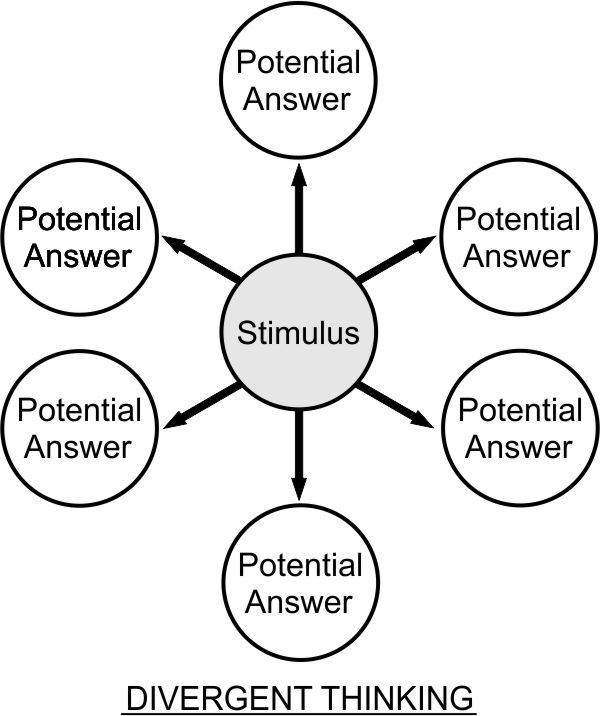
Before I challenge my students to design a project on his/her own, I provided them with an experience in divergent thinking.  I used the lesson from John Spencer that he provides for FREE as download from his PBL Toolbox.  Here is his maker challenge:


I gathered supplies at the ready for my students including scissors and masking tape to aid in the construction. 

Once my 20 students arrived, I introduced them to the challenge and gave them 5 minutes to brainstorm what they each would make with the given materials.  They proceeded to share their ideas round-robin style with classmates at their table (4 students total).  

Students sharing their ideas in their groups of 4 at their table.

Next, I formed teams of 2 students (random name drawings chosen from a coffee can).  Once in their team they shared ideas and crossed out ones that didn't make sense, combined similar ideas, and even tried to "mash-up" seemingly unrelated ideas.  I then asked them to choose 1 idea to construct a prototype of in the next 40 minutes.

Students in teams of 2 sharing their ideas and deleting, combining,  & mashing-up!

As I walked around the room, I asked students what they were making and was sure to ask them what problem their idea would solve and who the prospective user would be.  With this being my first time doing a maker challenge, I was impressed at their enthusiasm and the uniqueness of each group's ideas.


Students constructing a roller coaster ramp.  FYI it never fully worked during their tests, but it did work when they presented to their classmates!  #superexciting 

Team modeling their latest snorkel-goggle prototype!

After the 40 minutes of construction, students proceeded to share their prototypes with their classmates.  Here is what the 10 teams produced:  bird feeder, play mobile for crib, floating Ferris wheel toy for the bath, roller coaster ramp, mini-guitar picture frame, slingshot, snorkel-goggles, portable flute, bluetooth controlled portable fan,  and fishing pole with floating tackle box.  Yes, all those different ideas from using the same materials!


Student Reflection
The last part of the challenge was for each student to reflect on their experience.  I asked them to respond to 3 questions on our LMS:

  1. What was your product?  What problem does it solve and who is the ideal consumer?
  2. Describe 2 problems or failures that happened along the way to creating the final product.  How were they overcome and/or what was the importance of them?
  3. What is 1 takeaway from your experience in the Maker Challenge?

Here are some of their responses:

Problems/Failures:
" It was much more harder to make than I thought it would be, and I realized that when looking at the materials. We also had to play around with the design and what we wanted it to look like. It took a couple of eliminations and additions of materials to be satisfied with the final product."


Takeaways:
 "It was a good was to practice being creative and to really think outside the box. I also found brainstorming independently and then combining ideas with other people to be extremely helpful and productive."

"One thing that I learned from this activity was that when designing a product or simply completing a task, it's not always going to go as planned so in order to be successful you are going to need to be innovative in the sense that you need to be creative with how you find a solution to any obstacles you may stumble upon."

"I've realized how difficult it is to design and create new products and prototypes without ample time and research. It makes me wonder how people keep inventing new and original technologies."


From Divergent Thinking to Design Thinking for PBL
I began by providing my students with a challenge (set of materials), they brainstormed many ideas for what they could make out of them.  Thus, there was no wrong answer and the only constraint was the materials list.


After the students created a list of possibilities, they used convergent thinking with a partner to narrow their lists down to 1 idea to construct.  As my students move on through PBL,  I will promote a more design thinking approach to their project.  The concepts of the project will be determined by the MA Department of Education Standards/NGSS for Waves.

Please check back for my next blog on PBL in Physics (Part 2 - the Standards)