Tuesday, April 24, 2018

PBL in Physics (Part 1 - the Maker Challenge)

Thank you for clicking on my blog!  For the next several weeks I will be sharing my experience with Project-Based Learning in my high school physics class.  After 5 years of flipped learning, I am finally venturing into the world of PBL.  When transitioning from a traditional lecture-style classroom to a flipped classroom, the biggest thing you gain is TIME -- time to try new and innovative approaches such as PBL.

As I am currently teaching one section of Honors Physics, this gives me the best opportunity to pilot PBL.  We just returned back from a week of April vacation and finished up a unit on Electricity & Magnetism, so the students are refreshed and ready for a new challenge.   The PBL will be for the unit on Waves.  I feel this is a perfect fit for PBL as there are many examples of waves (water, sound, light, seismic, etc.) and students can choose which waves they want to apply the standards to and create a project.


Maker Challenge
Before I challenge my students to design a project on his/her own, I provided them with an experience in divergent thinking.  I used the lesson from John Spencer that he provides for FREE as download from his PBL Toolbox.  Here is his maker challenge:


I gathered supplies at the ready for my students including scissors and masking tape to aid in the construction. 

Once my 20 students arrived, I introduced them to the challenge and gave them 5 minutes to brainstorm what they each would make with the given materials.  They proceeded to share their ideas round-robin style with classmates at their table (4 students total).  

Students sharing their ideas in their groups of 4 at their table.

Next, I formed teams of 2 students (random name drawings chosen from a coffee can).  Once in their team they shared ideas and crossed out ones that didn't make sense, combined similar ideas, and even tried to "mash-up" seemingly unrelated ideas.  I then asked them to choose 1 idea to construct a prototype of in the next 40 minutes.

Students in teams of 2 sharing their ideas and deleting, combining,  & mashing-up!

As I walked around the room, I asked students what they were making and was sure to ask them what problem their idea would solve and who the prospective user would be.  With this being my first time doing a maker challenge, I was impressed at their enthusiasm and the uniqueness of each group's ideas.


Students constructing a roller coaster ramp.  FYI it never fully worked during their tests, but it did work when they presented to their classmates!  #superexciting 

Team modeling their latest snorkel-goggle prototype!

After the 40 minutes of construction, students proceeded to share their prototypes with their classmates.  Here is what the 10 teams produced:  bird feeder, play mobile for crib, floating Ferris wheel toy for the bath, roller coaster ramp, mini-guitar picture frame, slingshot, snorkel-goggles, portable flute, bluetooth controlled portable fan,  and fishing pole with floating tackle box.  Yes, all those different ideas from using the same materials!


Student Reflection
The last part of the challenge was for each student to reflect on their experience.  I asked them to respond to 3 questions on our LMS:

  1. What was your product?  What problem does it solve and who is the ideal consumer?
  2. Describe 2 problems or failures that happened along the way to creating the final product.  How were they overcome and/or what was the importance of them?
  3. What is 1 takeaway from your experience in the Maker Challenge?

Here are some of their responses:

Problems/Failures:
" It was much more harder to make than I thought it would be, and I realized that when looking at the materials. We also had to play around with the design and what we wanted it to look like. It took a couple of eliminations and additions of materials to be satisfied with the final product."


Takeaways:
 "It was a good was to practice being creative and to really think outside the box. I also found brainstorming independently and then combining ideas with other people to be extremely helpful and productive."

"One thing that I learned from this activity was that when designing a product or simply completing a task, it's not always going to go as planned so in order to be successful you are going to need to be innovative in the sense that you need to be creative with how you find a solution to any obstacles you may stumble upon."

"I've realized how difficult it is to design and create new products and prototypes without ample time and research. It makes me wonder how people keep inventing new and original technologies."


From Divergent Thinking to Design Thinking for PBL
I began by providing my students with a challenge (set of materials), they brainstormed many ideas for what they could make out of them.  Thus, there was no wrong answer and the only constraint was the materials list.
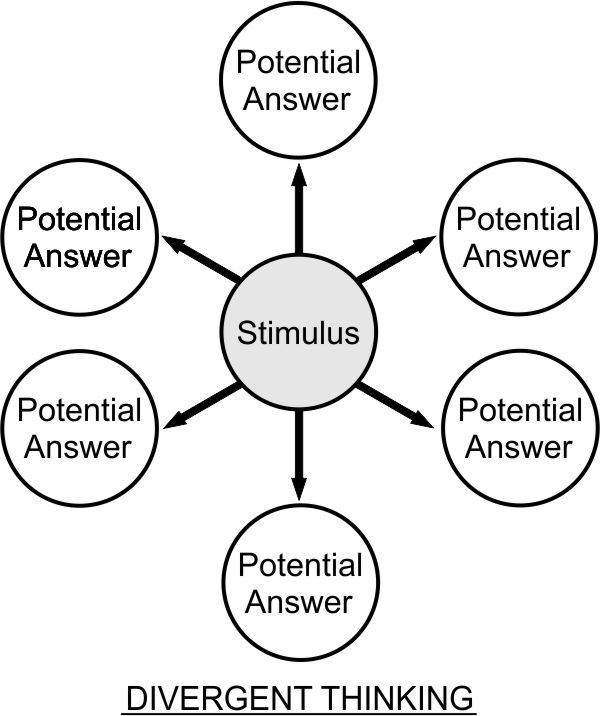

After the students created a list of possibilities, they used convergent thinking with a partner to narrow their lists down to 1 idea to construct.  As my students move on through PBL,  I will promote a more design thinking approach to their project.  The concepts of the project will be determined by the MA Department of Education Standards/NGSS for Waves.

Please check back for my next blog on PBL in Physics (Part 2 - the Standards)


Thursday, February 22, 2018

Empowering My Flipped Classroom

Empower is honestly a book I should read every month to remind and reaffirm to me that what I do in my classroom is right for students.  AJ and John introduce the book as for "the wild ones" and "the innovators and teachers who are rewriting the rules."  THIS BOOK IS FOR ME!  There is so much I take away from this book, so without further ado, away we go . . .


For 19 years I was that teacher.  The teacher whose students were being talked at and taking notes.  I would do so much work to find demonstrations to make the concepts come alive.  I spent countless hours writing and rewriting prescribed labs only to get back the same thing from every student.  The only thing I knew was "the old formula" for my students - to be compliant.  5 years ago I shifted to the flipped classroom and have seen increased engagement and empowerment in my students each year.

AJ & John define the empowered classroom as one that is (and I paraphrase here) committed to student interests, to prepare them for anything, to ask them "What do you want to learn?", to have students create their own path, having students assess their own learning, and to promote creativity.


In Chapter 3 they promote the shift from "making the subject interesting" to tapping into student interests.  As a physics teacher, I always prided myself on finding real-world examples to make the concepts relatable to my students.  I performed cool demonstrations (the disappearing eye dropper!), found interesting videos (Bill Nye anyone?), and created exciting activities (pushing my car to study Newton's 2nd Law!) to "wow" my students.  There was one thing I didn't realize then - these things were all cool and exciting to me, but were they cool and exciting to my students?  I was doing so much more work than my students were.  In a traditional classroom, it is easy to sit there and "do school"  - take notes, fill out the worksheet, complete the lab report, take the test, REPEAT.  However, empowering students takes more work on their part than a traditional classroom as students now take ownership of their learning.  Empower pushes me to ask my students what their interests are and how they can relate the concepts to these interests.


Student choice is the basis for Chapter 4 and has challenged me to rewrite my unit on Waves and Light next term.  I give students choice in my classroom from Genius Hour to their products that showcase their learning.  However, I have not gone full PBL and empowered my students.   I am currently planning for students to choose how they access the content for Waves and Light (characteristics, behaviors, the EM Spectrum, image formation by mirrors and lenses), then asking them to demonstrate their knowledge by making a video (or digital book or podcast) their classmates can also access to learn the concepts.  By doing this I hope to achieve AJ & John's goal of - "Changing the game of school means actually allowing students to create their own game.  This is empowerment."  This empowerment really starts with a single question as posed in Chapter 5, "What decisions am I making for my students that they could make for themselves?"   As each year of flipped learning has gone by, I have given up more and more control to the students.  "It's a shift from a compliant mindset to a self-directed mindset" as AJ & John stated in Chapter 6.  This shift is not only for teachers but for students as well.  


In Fall 2016, I introduced an Innovations Class to my high school.  I had been inspired by Don Wettrick and his students at Noblesville HS and wanted to offer this opportunity to my community of learners.  This type of class is one that demands students to be self-starters and self-managers (Chapter 6).  Students begin by choosing topics, writing pre-mortems, and proceed to chart their course.  They further set 2-week plans, choose strategies to achieve their goals, and provide evidence of answers to their questions.  During this process, there is much 1:1 peer assessing (via Walk and Talks) and self-assessing of their progress.   Some are conducting interviews, creating and analyzing surveys, reading articles, watching videos, and cold emailing professionals in the field.  Yes, and all this is going in one classroom!  It may appear chaotic from the outside, but I appreciate how each student is choosing to create his/her "authentic research experience."  (Chapter 7)


Now how does a teacher go about assessing these new experiences?  In Chapter 8 AJ & John challenge teachers to make assessment more like life and less like school.  "The shift from taking an assessment to assessing their own learning."  My classroom has become full of micro-conversations with individual students, thus giving consistent feedback throughout the learning process.   But how I can I empower students to own the assessment process?  They suggest students be able to figure out:
  • what they already know
  • what they don't know
  • what they want to master
  • what they will do to improve
"Through self-assessment students attribute success to themselves, not the teacher and feel empowered."  I look to use more of what they recommend to challenge my students to: 
  • chart progress
  • track goals
  • self-reflect
  • survey their learning
  • self-assess with rubrics
  • use checklists
These are many ideas to consider when designing assessments to include students in the process.


In Chapter 10 AJ & John talk about ice cream.  Ice cream?  They lay out the argument of differentiation in a tiered system compared to an adjustable system.  Their example is as follows:  at Baskin Robbins you can choose your flavor and choose 1 scoop, 2 scoops, etc.  However, at your local frozen yogurt place, you can choose exactly the amount of fro-yo and the type and amount of toppings as well.  From the tiered system of BR31 where the teacher provides the options to the adjustable system of fro-yo where students "own the entire process."  Now before you open up your fro-yo classroom, think about this - what about a Coldstone Creamery classroom?  That is one where "students move from choice to freedom in the content."  They take it one step further and ask, "What if students felt the permission to modify things on their own?  #mindblown  For a student to modify on their own s/he would have to be in tune with their learning style.  I have sat in many IEP meetings where parents and teachers discuss the accommodations in the plan.  But instead of parents and teachers being responsible for these, what if the student took real ownership of their learning and designed their own strategies to best assess their learning?  There is much to consider here and would be a shift in thinking how to execute an education plan.  With classes of students with a multitude of learning styles, this appears messy and chaotic, but as AJ & John state, "but it doesn't matter, its frozen yogurt, every work is supposed to be different."


When I reflect on my first 19 years of teaching, I thoroughly enjoyed being up there in front of the students.  Every lecture was a performance.  I loved making bad physics jokes and being the one person in the room who had all the attention.  How could I flip my class and put my students in charge of their learning and be relegated to "guide on the side"?  What would happen to me?  AJ & John respond, "So does being a "guide on the side" mean you lose your influence?  No.  Guides are actually pretty influential (take Gandolf, Yoda, Ms. Frizzle)."  In my flipped classroom I feel even more important now that I have the time to talk to every student every day and be their guide.


Thank you AJ and John for reaffirming for my shift in teaching 5 years ago, the inspiration to keep going, and the new challenges you pose in Empower.

Monday, February 19, 2018

Encouraged by Shift This!

Last year one of my Edu-Heroines, Joy Kirr, shared her story of shifting from a traditional classroom to a student-centered learning environment.  Shift This provides teachers a window into her classroom and how she has changed the learning space, classwork, homework, & grading and further challenged her students to become self-directed.  Here are my takeaways from her book:


In Chapter 4 Joy shares with us the power of music in the classroom.  As I have been practicing flipped learning the past 5 years, I always look for ways to get music into my video lessons.  "Freefalling" by Tom Petty is pretty obvious for a video on gravity and thanks to Justin Timberlake for the song "Mirrors" as the intro to my video on image formation by mirrors.  I have been playing music during class for years now.  I even installed 4 speakers in each corner of the room to create some surround sound.  I take requests from students and even have my room playlist up on Spotify.   As much as Joy promotes music in the classroom,  she truly does practice what she preaches as she played and even sang along to "Let It Go" last summer during her presentation at BLC17!


When I was a traditional classroom teacher, I did my best to answer every one of my students' questions.  However, in my flipped learning environment, I often put their questions back on them.  Joy states, "If students ask you a question, ask it back to the class to see what they think.  Try your best to not answer their questions, let them figure out their own answers instead (Chapter 5 Classwork)."  This has been a big transition for me as I now usually answer a student's question with a question.  The most common instance of this is when my students ask me to check their answer to a physics problem.  Pre-flipped learning I simply answered it, but these days I encourage them to check with their group (they sit in groups of 4 students) or I ask them to describe to me how they solved the problem.  By doing this I aim to promote more collaborative problem-solving and learning the process over just getting the right answer.


What is the true purpose of grading?  Feedback.  My students work in small groups (usually 2) on projects to showcase their learning by creating digital books, screencasts, and slide presentations.    When one of the students asks me to check the work,  I typically respond with, "Can you have your partner proof over it first?" In Chapter 7 Grading Joy observes, "The more feedback students can give one another before you see their polished work, the better the work will be by the time it gets to you."  
This is definitely true as I witness the conversation that ensues and seeing them make improvements to their work before asking me again for feedback.  This gives me more confidence that both students are working collaboratively and that the product best represents their effort. 


I first heard of Joy Kirr when I began searching for more information on Genius Hour.  She is the curator of the spectacular Livebinders page on Genius Hour.  I have incorporated this passion time or 20% time into my flipped classroom the last 5 years.  Genius Hour provides students with the  class time to research a topic they are interested in.  As a process of this style of self-directed learning, I am always asking students to blog on the questions, "What did I learn?" "What are the next steps?" as Joy encourages.  In Chapter 9 Student-Direct Learning she states, "The biggest result of including Genius Hour in my pedagogy is that I am now comfortable enough to offer more student voice and choice in all we do."  Absolutely Joy!  I find myself allowing students to make more choices on how they present their learning.  In fact, a student last week asked me what example she should use in a presentation as evidence of learning a concept.  She even gave me a few choices for me to select from, but I simply responded, "Whichever example you think best illustrates the concept."  Her mind was blown!  


In conclusion, I would say the biggest takeaway from reading her book has been inspiring me to finally take my desk out of my classroom.  I did it!  Now that I am over halfway through the school year, I can honestly say it is the best thing I have ever done.  Joy asks in her book, "How do you build trust with students?"  Without being chained to a desk, it forces me to walk around more and talk to students.  It is these one-on-one conversations about their interests and connecting with them that improves the overall learning.  It is not sitting at my desk going through emails or blogging (haha!).


A BIG thank you to Joy for sharing her story!  As I have also shifted my classroom, it is comforting knowing there are more teachers out there like Joy taking these risks and reaping the benefits and rewards for their students.


Thursday, February 8, 2018

Micro-Conversations in My Flipped Classroom

5 years ago when I flipped my classroom, I was challenged with one thing - what was I going to do now that I wasn't in front of the classroom at the whiteboard?  I had to get out there now into the sea of students to help them, and seemingly without a life raft!

Not only was I not ready, but my students were not ready.  To foster an improved flipped learning environment I rearranged lab tables to promote more student collaboration and I also placed stools around the room for me to sit on as I interacted with students.  I remember the first day of school being at the front of the room going over the syllabus and then proceeding to sit down on a stool in front of a table of students.  One of the students backed up his chair away from me and I made the joke, "Am I too close?"  This was a shift as students were used to having the teacher far away in front of the room, while they sat back at their desks.  As awkward as this may have been for me and my students, some great things were about to happen . . .

Let me ask you a question - what are the biggest fears for a student in a traditional classroom?

Being called on to answer a teacher's question in front of his/her classmates and being wrong
Asking a "dumb" question in front of his/her classmates

In a flipped learning environment these fears are removed.  As I walk around and help students, they are more comfortable asking me questions one on one.  Flipped learning gives me this time to have these micro-conversations.  

If you walk into my classroom on any given day, you will see me talking to students, individually  or in small groups.  When a student has a question, I may sit down on a stool next to their table or sit with them if there is a spare chair.  Other times I may respond to a student's quetsion with a question and then tell them I will "do a lap" around the room to give them time to think deeper about my question and come back to them.

These micro-conversations involve:

responding to a student's question
asking a student a question to probe deeper thinking
asking a student to give more evidence of his/her learning
differentiating a problem or task for a student


So what is my life raft these days?  Chalk markers!  I use them to write on their lab table and give a "mini-lesson" to them.  These micro-conversations allow me to personalize learning and differentiate on the fly for each student.


I write on the lab tables more than I write on the classroom whiteboard.  The shift from lecturing all of my students to having micro-conversations with individual students has enabled me to better personalize learning.  It is definitely safe to say that  I talk to every student every day.  I know where each of my students is with their content knowledge/skills and can take them from where they are giving them the necessary feedback at the time they need it.

How do you create opportunities to get you know your students better?

What strategies do you use in your classroom to allow for more micro-conversations?

Please leave your comments below.  Thank you!


Monday, September 14, 2015

The First 3 Days in My Flipped Classroom

While entering my 3rd year of flipped learning, I wanted to plan out my first 3 days for students in my flipped classroom.  What were the most important things to address in the first week of school?   Here is what I did to begin this school year . . .


Day 1
As students entered the room I got them seated and welcomed them to the class.  A few remarked how the room was different than other classrooms.  I pointed out that my desk was in the back of the room and explained to them why I moved it (I don't lecture anymore).  

I began the day by telling them I wanted to teach them something that I could not teach any other students in my 22 years of teaching.  My goal was to make them feel special on this first day, and, well, they should feel special!  I shared with them the first EVER images of Pluto taken by the New Horizons spacecraft from July 2015.  Many of them had not seen the images and I was happy to give them their first exposure to the new discoveries made about Pluto.

New Horizons image of Pluto, 2015 (pluto.jhuapl.edu)

I then gave them some information on the flipped classroom,  made some short remarks on Digital Citizenship, and away we went with distributing the class set of iPads.  

Once students had iPad in hand, they each signed up for Edmodo and responded to a post:

"What is something you learned this summer?"

As students shared what they had learned, I began choosing students to share more about their response.   As one student replied that she learned how to deal with people better, I asked her in what context.  She said she was a cashier for a local supermarket.  I then asked her, "How did you learn to do that?"  Each successive interaction ended with that question and I recorded the "How?" of learning on the white board.  (This would be saved for a future discussion about Learn Like a Pirate!)

How did you learn?

Lastly, I assigned their first homework of the year - for each student to create their own blog.   The last 2 years I used student blogs as a way to document their Genius Hour journeys, but this year was going to be bigger -- blogs for assignments, problem solving, and a way to respond to physics misconceptions.  


Creating a Blog on Blogger (video lesson)


Day 2
This was really the most fun day of the 3!  From the previous 2 years of flipped learning, I have seen students make mistakes in how they interact with my video lessons.  I wanted to find a way to teach students how to learn from a video, but how?  As I attended FlipCon15, Aaron Sams (@chemicalsams) remarked one day that his son learned card tricks from YouTube.  Light bulb!!!  I tweeted at Aaron and asked him if he could share which YouTube channel his son learned card tricks from (it is MisMag822's channel).  With that in hand, I tried out a few simple card tricks.  If I can learn card trick from a video, anyone can!   I took a trip to the Dollar Store and purchased 12 decks of playing cards (2 for $1 actually).  This was enough for 1 deck per pair of students.  I thought of having a deck per student, but wanted to encourage collaboration and have students teach each other.  

Elise & Siena learning a card trick
Shawn learns the agony of defeat . . . almost there!

Once each group had learned their trick, they then had to perform it for others.  As you can see from the video above, it doesn't always go as planned!  This activity was fun for the students and allowed me time to get to know them through an informal non-physics activity.  It definitely turned out to be an ice-breaker!

At the end of the class I asked students to comment on how they learned the card trick from the video.  Here are some responses from a post on Edmodo:


The responses hit on the basic things to keep in mind while learning from a video:

     1.  Watch the video multiple times.
     2.  Pause the video (to catch up or write down notes).
     3.  Rewind the video for clarification.

It is my hope that my students will interact with my physics video lessons in the same manner to learn physics concepts.


Day 3
As I am in my 3rd year of flipped learning, the word is out amongst students in my school.  Some are excited for it, while others have concerns.  I started making Student Testimonials videos after my first year and they prove effective.  That first year a girl in the video (then a junior, but a senior to the students who watched the video), was contacted by a current student.  The student shared his/her concerns with her and she was able to encourage the student to stick with my class.  Below is the second of these videos that I showed during class to my 2015-16 physics classes:

Student Testimonials Video 2015


 I proceeded to revisit Digital Citizenship which I had briefly mentioned the first day of school.  I was going to search out some good scenarios online, but after 2 years of having iPads in my classroom I had plenty to choose from.  Each of the scenarios really did happen (#icantmakethisstuffup).  Here are the 5 scenarios I created for students (in groups of 4) to discuss and share their thoughts on:

My Digital Citizenship scenarios (of course all correct answers are "D!")

From there each student signed off on the poster from Edmodo's Digital Citizenship Starter Kit.  I then post these in my room as a reminder to be good digital citizens.

Finally after being in the class for 3 days, I asked my students to create their first blog post.


It was kind of a last minute idea for me, but it worked out very well as I got to know my students better and get a pulse on how each is feeling about flipped learning.

Thank you for reading my blog!  What activities do you do in your classroom to begin the year?  How do you introduce flipped learning to your students?  Please leave comments below.


Saturday, February 21, 2015

Beginning Genius Hour with Drive

Having just started Genius Hour with 4 of my high school physics classes last week, I return to the book Drive, by Daniel Pink for inspiration.  Over the past 6 months my students have been learning physics, well, what I have wanted them to learn about physics.  After receiving several feet of snow in Massachusetts this winter, it is now time to let them stretch out and choose what they want to learn.    Students in my classes are very grade conscious, and sometimes achieving the desired grade gets in the way of learning the concepts.  As introduced in the book, researchers discovered that,  "The performance of the task (and not the end result) . . .  provided intrinsic reward."   Thus, with Genius Hour students will focus more on the process of learning and reap the rewards of such a challenge.

As we prepare students for the future, we see that they must be more self-directed, creative and intrinsically motivated.    New jobs have become "less routine and directed by others."  As I ran Genius Hour for one term (9 weeks) last school year,  I could see how many students were challenged by the project.  Several students were overwhelmed with the fact they could choose any topic they wanted to.  While others were uncomfortable with the changes their project took throughout the 9 weeks.  As traditional learning often has a direct route (lecture, activity, homework, test), Genius Hour can take many twists and turns.  This is something students are not traditionally instructed on how to handle or cope with.   As stated in Drive, "Those sorts of challenges - solving novel problems or creating something the world didn't know it was missing - depend heavily on Harlow's third drive."  This "third drive" being the performance of the task as the motivator.


What else do employers demand in the 21st Century from their employees?  Autonomy.  Pink presents how businesses are creating ROWE (results oriented working environments).  ROWE was pioneered by Cali Ressler and Jody Thompson of big box store Best Buy.  "Management isn't about walking around and seeing if people are in their offices.  It's about creating conditions for people to do their best work."  As educators we could easily replace "Management" with "Teachers" and "people" with "students." It is important to note that students do need assistance in making the transition in learning.  I address this by creating many opportunities for students to receive feedback on their research.  I begin Genius Hour by having students brainstorm ideas, they proceed to write these ideas on a poster.  Students then carousel poster to poster and comment on each other's ideas.  My students also create blogs to document their progress on Genius Hour.  Students and myself further comment on the blogs to inspire, challenge, and support the learning.

The opposite of autonomy is control.  Pink states, "Control leads to compliance; autonomy leads to engagement."  This I believe is the bigger goal of Genius Hour.  Last school year I saw students more engaged and learning to become self-directed on the steps to answering their questions.  As Pink says, "Only engagement can lead to mastery."  During the student presentations it was evident that students became kind of  "mini-experts" of their topics.    In fact many students produced more than just a slide presentation to summarize their research.  One student created a javascipt program to demonstration resonance while a few others constructed robots.  "The desire to do something because you find it deeply satisfying and personally challenging inspires the highest levels of creativity," stated Professor Teresa Amabile of Harvard University.  I look forward to what my students will create this year for Genius Hour.

Blogging is a way to teach students about good digital citizenship.  I have students create blogs to document their research, but I also encourage them to write about how they feel about the project.   Pink states, "At the end of each day, ask yourself whether you were better today than you were yesterday."  I intend to use this question often as a prompt for blog posts.  I want to encourage students to express their thoughts and feelings about the journey as for many this will be their first time being self-directed learners.  It is important for me as a teacher to hear from my students to then make decisions on how to best support them throughout the project.

Genius Hour is vital to our students' success as schools continue to promote compliance instead of engagement.  Pink points out, "They're (schools) redoubling their emphasis on routines, right answers, and standardization." He further advises, "Whatever they're studying, be sure they can answer these questions:  Why am I learning this?  How is it relevant to the world I live in now?"   These are questions I intend to ask my students throughout their journey through Genius Hour this year.

If you are considering implementing Genius Hour in your classroom, I highly recommend starting your journey as a teacher by reading Drive.

For those of you interested in following my students Genius Hour projects (topics, links to student blogs, etc.), you may do so at:


Monday, July 21, 2014

Reflections on Smarter Than You Think

With all of this talk about educational technology and flipped learning, parents, administration, and teachers alike are asking, “Is all of this screen time making our kids smarter?”  In his latest book Smarter Than You Think, Clive Thompson (available here at AMAZON) give us educators much support in our pursuit of increasing student learning with technology.  

Mindfulness
As students now have access to so much technology it is important to remember the need to teach them how to use technology for learning.  Teachers have to teach students how to be mindful.  Clive Thompson defines “mindfulness” as “paying attention to your own attention.”  I think we all struggle with how much screen time is too much and when to say when.  As EdTechTeacher instructor, Greg Kulowiec, often recommends (and I’m paraphrasing here), “If the iPad is making a task more difficult, then put it away,”  Clive confirms that, 

“One of the greatest challenges of today’s digital thinking tools is knowing when not to use the, when to rely on the powers of older and slower technologies, like paper and books.”

It is important as we blend or flip learning, that we don’t try to reinvent the wheel.  With the addition of iPads into my classroom, I was aware that students knew how to consume content.  My challenge was to teach them how to use the iPads for learning and to be mindful throughout the process.

Video as the New Literacy
Once I received a grant for a classroom set of iPads (25), I was most excited about students creating.  Sure my students watched my flipped video lessons online, but I wanted them create their own.  I frequently challenged students to do video labs, a sort of DIY production in the physics lab.  Clive states, 

“Another key area of video literacy is our growing ability to capture ideas that are difficult to represent in text . . .  That’s because complex physical skills are often incredibly hard to describe in words.”  

You’re telling me!  After 19 years of teaching, I found students struggled with lab reports.  Sure they could write introductions, make graphs, but the analysis of data and drawing conclusions was the tough part (and worse yet, the waste of time it was to see cut and paste procedures).  In a video students can show how they collected data.  They can then annotate graphs and discuss what their significance is.  Clive states, “The difference is, while we’re taught in school how to write and read, our traditional literacy focuses less on these new modes of publishing.  We’re working them out on our own for now and discovering just how powerful they can be.”  With this new literacy I can both see and  hear my students talking about physics, something a traditional lab report could not do.


Writing for the Masses
People are writing now more than ever (on Twitter, blogs, message boards, etc.).  What most people neglect to see is that all of this writing as Clive says, “(is) almost always done for an audience.”  When you think that someone else may read your writing, you pay more attention to detail, back up your arguments with proof, etc. Clive notes, “Social scientists call this the ‘audience effect’ — the shift in our performance when we know people are watching.” 

When I began my first venture into Genius Hour this past Spring, I wanted a way for students to write about their progress.  For most students it was their first time creating blogs.  I commented frequently to give them additional ideas, but it was when I required they comment on each other’s blogs that I really saw the power of blogging.  I further reached out to my PLN and tweeted the links to my students’ blog and many of them were excited to see comments from across the country and views from around the world.  It was during the blogging process where I saw students write more meaningfully and thoughtfully about their learning.


The Case for Collaboration
Every day we see people online collaborating.  From fan fiction to gaming it is possible to collaborate on anything.  Mass collaboration wasn't possible before the internet (imagine the difficulty of coordinating and creating an inventory of information by phone calls and file cabinets!).  However, in order for an online group to be successful Smarter Than You Think states, 

“The members can’t have too much contact with one another.  To work best, the members of a collective group ought to be able to think and work independently.  Too much contact risks - blocking, social dampening.  Thus “virtual groups” are best, especially for introverts.”

“Learning how to collaborate — particularly on a meaningful real life project, not just a piece of schoolwork — is a crucial skill.  In real life, people rarely learn and solve problems in isolation.  They do it together.”  Clive Thompson

This quote challenges me as an educator to get my students not only to collaborate with those in the classroom, but outside the classroom.  It also reminds me the importance of collaboration for students who do not often have a voice in the traditional classroom.  With technology I have the opportunity to have students in one class collaborate with students in another class on a lab, project, or maybe even something bigger . . .
  

To Code or Not to Code
If you would have told me 20 years ago that I would be teaching the same content the same way, I would’ve said you were crazy!  Unfortunately it is the truth.  Clive observes, “The classroom hasn't changed much over the years.”  Sure many of us have access to computers, but they have typically  been used to do the same tasks (word processing, making graphs, etc.).   Smarter Than You Think states, “But truly clever teachers go one step further:  They teach their students programming itself — how to write code.”  as a “way of learning about learning.”  As teachers we can't just simply replace the pencil with an iPad. We need to challenge students to think logically.  

Before I read this chapter in the book, a few tweets had caught my eye regarding coding.  I went to the links and then found a great Livebinders page on Coding.  This book was reading my mind!  I hope to introduce coding into my physics classes next year and further stimulate students’ abstract thinking and problem solving abilities.


Ambient Awareness
How do our students say in touch with each other?  You might say texting which is partially true, but the main medium is Twitter.  Twitter is a place where students can follow hundreds of others in the school and be aware of the goings on day in and day out.  It is this new found “ambient awareness” (as Clive calls it) that has changed society. 

Anyone that knows me is aware that I spend a lot of time on Twitter.  Yes, I have 4 Twitter accounts (#confession).  I have a professional Twitter that I connect with all of you on, but I also have a Twitter specifically for my students to follow me on.  As teachers we now have the ability to be in touch with students outside of the classroom 24/7 as I choose.  Yes, students still email me with questions, but newer more familiar means to students exist (Edmodo, Twitter, etc.).  With this new literacy teachers can now hold "ambient office hours" as Amy Burvall illustrated during the Building Learning Communities conference last week.

for more educational artistic inspiration please follow @amyburvall
Where Do We Go From Here
Internet searches as “semantic” memory, facts.  Now as people we can decide what not to remember as these facts become easily looked up.  “If we know a digital tool is going to remember a fact, we’re slightly less likely to remember it ourselves”  — think cell phone numbers.  But can this decreased memory hurt us?  Back in the day even Socrates grappled with a similar problem as Clive comments,

“ . . . I talked about how Socrates feared that writing would kill off the Greek tradition of debate and dialectic.  But he also worried it would destroy our factual knowledge.  This sort of memory was regarded as a “key cognitive skill for the elites. … But what Socrates didn't foresee was the types of complex thought that would be possible once you no longer needed to mentally store everything you’d encountered.”

In the classroom is no longer good enough to ask students questions that are Googleable.  Since we are shifting from measuring intelligence by one’s ability to solve problems to the ability to design problems.  As I teacher I am challenged to teach students not how to answer questions, but to how to ask better questions.  Clive summarizes, “How should you respond when you get powerful new tools for finding answers?  Think of harder questions.”


In conclusion I wish to thank the member of my PLN who tweeted about this book a few months back.  I am sorry I cannot remember who shared this read.  As evidenced in the book — in a time where collecting and saving information is easy, it still remains a challenge to search and find things.  I’ll take that as my excuse!