After 4 weeks of my Honors Physics students working towards the Waves standards, their PBL projects are done! Students created a variety of projects - videos, websites, children's books, a board game, Minecraft, 3D printed models, and much more.
Here is what my students said about their first experience with PBL:
"Creating and redesigning my 3D models of the physics activities I created in class was my proudest accomplishment because i felt as though it was a cumulation of what I had learned about waves and general physics as well as what I had learned in my other engineering courses. It required my knowledge of designing and creating parts with computer aided design software while simultaneously demanding me to explain it to other students to further their knowledge of waves / physics concepts."
"I felt that one thing that I really improved upon while taking your class was understanding myself as a learner. This really helped me improve upon myself in your class, in other classes, and in many other situations. I learned that I often do better when I take my time and talk things out. Which is why the waves PBL really seemed to work for me. I prefer to do focused work alone in quieter settings and that was also accomplished in the PBL unit."
"I feel like when people dedicated enough time to the project, they learned a lot. It was something you had to put effort into, so you couldn’t coast through it."
"My biggest success was completing the waves project because I represented my knowledge of the concepts in a creative and innovative way."
As I surveyed the students to ask them if I should do more PBL next year, the response was an overwhelming YES! Upon reflection of this Waves PBL unit, I appreciated the opportunity it gave me to have even more 1:1 discussion with students and their ability to choose how they would present their learning of the concepts.
Now that students have become familiar with the content and have a project idea, it is time to get to work! I have a general plan for the next 3 weeks which will include students researching the concepts pertaining to the standards, 1:1 conferences to assess level of understanding of the standards, working on their projects, and other days will they will discuss content and complete short activities.
The first work day saw students researching the concepts of wave production and characteristics to prepare for the assessment of Standards 1&2. Here are the standards as presented to the students:
Standards 1 & 2 Assessment and Evidence
To enhance their exploration of the standards, I had my students construct a wave machine out of Sour Patch Kids, skewers, and duct tape. Once it was assembled we could observe how waves are produced, how to compare the frequency and wavelength of waves, wave reflection, and wave refraction as demonstrated in the video.
The following class I facilitated a discussion about wave characteristics by using the "Turn and Talk" method as developed by Dan Jones (@ideasforteacher). When I first heard about Dan's idea, I immediately visualized the abbreviation TNT for turn and talk and thought these talks could be explosive for student learning!
TNT Cards! #explosive
After each student responded to the question on the card individually, they were instructed to "Turn and Talk" to their partner and discuss the question.
Jayne talking about the wavelength of a wave with her physics partner
Students had the rest of class to further explore the content of Standards 1&2 in preparation for the upcoming 1:1 conference next class. During a 1:1 conference I have the opportunity to talk with my students about their understanding of the concepts. A conference usually takes 2-3 minutes with each student during which the rest of the class works on preparing for their conference or on designing their project. During the conferences for Standards 1&2, I asked the students questions pertaining to the standards and students had the use of a whiteboard to define concepts and sketch any relevant diagrams to aid in their discussion.
Matt presenting his knowledge of Standards 1&2 during a 1:1 conference with me
At the end of the conference students had the further opportunity of sharing any way they personalized their learning of the standards. Here Nic made a short video of him playing guitar and a close-up of the guitar strings where he talked about how the waves on the string are produced and how they in turn produce sound waves.
Nic representing waves produced on a guitar string
As students move through the work days, they will continue to have experiences of TNT Cards, short activities/demonstrations, and 1:! conferencing as they work on their projects. My next post will be at the end of the PBL unit and showcase student projects, wish me and my students luck!
What are you experiences with PBL? How do you give students the opportunity to personalize their learning? Leave a comment below.
Day 3 - How Does a Slinky Fall? & Guidelines for the Project
After a few days into PBL I began Day 3 by introducing students to what waves do - waves carry energy (or information). I find the best way to get this across is by doing Derek Muller's demonstration of How Does a Slinky Fall? I show this video (partial), demonstrate the choices of how it could fall, and survey the students. If you haven't seen it check it out below:
After the students vote, I show the rest of the video and then proceed to the stairway down the hall to drop a mega-slinky. The idea here is that the bottom of the slinky does not know the top has been dropped until the information gets to it - in the form of a wave! (this gets to the NGSS Waves standards)
Next, we moved onto the Guidelines for the Project courtesy of Dan Jones and J. Collier. After I read these for the first time, I wondered why I had not written these! They are very in line with my thinking of project creation. I especially like #8 which tells the students - if you tell your friend your project idea and they say it's great, it probably isn't! My thoughts exactly. PBL is a time to take risks, to fail, and to rise up and be awesome!
At the end of class, I asked students to further research the concepts of waves. I told them to define them by watching the video lessons, use of websites, and searching out Quizlets. They don't need to understand them (this is the goal of PBL), but they do need to be able to be familiar enough to have a conversation about them. This is in preparation for the Design Lab tomorrow.
Day 4 - Design Lab for Waves
What Is Design Lab?
The Design Lab was created by Dan Jones and something I learned about in the Flipped Learning Level II Certification I completed last Winter. Design Lab provides students with the opportunity to discuss the content and come up with their idea for their project. You can learn more about the details of the Design Lab on his blog,
I began the day by introducing Design Lab and the goal of moving from content to project idea. Students first began in pairs - one student stating all they knew about waves while the other took notes on their ideas. After 3 minutes, the students switched roles.
Student describing what she knows about waves.
Student taking notes on what her partner knows about waves.
Students were then asked to spend some time clarifying the concepts - that is to look at their notes and fill in the blanks (complete any definitions, correct any ideas, etc.). Each student proceeded to summarize what their ideas are about waves.
Students taking individual time to summarize their ideas about waves
Each student took their summary and moved into a new group of 4 students to share their summaries aloud. They further combined & categorized their ideas about the concepts of waves while noting 3 things:
1. Concepts they all stated about waves, hence the most important/need to know concepts of waves.
2. Concepts they weren't sure about (definitions or relationships).
3. Concepts they knew they had to dig deeper and look into more detail during the project.
From this discussion, students generated sticky notes to determine what they felt were the 3 most important ideas of waves.
Students generating the big ideas of waves on sticky notes
Now that students have explored the content and come up with the big ideas about waves, it was time for each student to figure out their project idea to best represent these concepts. I asked students to brainstorm 5 ideas they have to possibly represent the concepts of waves. They proceeded to choose the one idea that interested them the most and state 5 reasons why it would be a great idea for a project. Each student further created a rough draft of the idea (what it would look like, materials list, etc.). Students then moved into new groups of 3 to share their idea and get feedback from their classmates.
A student (left) shares her project idea with her classmates
Takeaways from Design Lab
All in all Design Lab was a success! It was a low-risk way for students to interact with the content without fear of failure. As I walked around I noticed lively discussion - students defining concepts in their own words, providing examples, and asking each other questions to further clarify concepts. I saw a lot of learning going on!
I also liked that it was fast-paced and had students constantly moving. We started in groups of 2, then to a group of 4, then to individual time, then moved to a new group of 4, then to individual time, and then finally to a new group of 3. This provided students with opportunities for new interactions and kept the discussions fresh.
If you are familiar with the suggested times for each part, I do want to note that I made small adjustments to the times as necessary for pacing. If students had completed a step, there was no need for down time to give them a chance to get off topic. Keep the line moving!
When it came to project ideas I noted a three types of students:
Student A who had an awesome idea!
Student B who had a "safe" idea, and needs to be pushed to make it awesome!
Student C who had no idea what their project could be.
Let's take a look at an example of each student in my classroom. One Student A has the idea of creating a children's book (the ones that use Velcro to attach concepts and pictures) as she enjoys writing. Now she might tell someone about this idea and her friend might say, "That sounds great!" However, what really makes this idea awesome, is that she is in 11th-grade Honors Physics and wants to create a children's book for her project - that is crazy! Obviously her challenge is simplify these ideas, whilst demonstrating a high level of detail in her presentation.
One Student B has an idea of doing some demonstrations with lasers and making a video of it. Now this sounds great, but how can this student make it awesome? Will they create a YouTube channel with a playlist of original videos? Will they make a children's science show?
Student C has no idea. Why? For most of my students this is their first time doing PBL (well, hey, it is my first time doing PBL too!). Their learning experiences have mostly been compliance-based (doing homework, taking notes, doing prescribed labs, taking tests, . . . and repeat). Thus, PBL aims to empower the student to take ownership of their learning by allowing them to chose how they can best represent the concepts in a meaningful way to them.
For these students I am providing a list of project ideas to inspire them to chose one or to come up with their own.
Next class we will reflect on the Design Lab process - what did they learn about the concepts of waves? Where are they at with their project idea? They will also start on their weekly schedule that will look something like this:
Thank you for reading and I welcome any comments below. How have you embraced PBL in your classroom? What are some project ideas you can share that I can add to my list?
* these ideas compiled by reviewing Dan Jones' website, BIE.org, learninginhand.com by Tony Vincent, and Edutopia.
Welcome back to my PBL journey! In Part 1 students exercised their creativity in the Maker Challenge, now in Part 2 it is time to introduce them to the context of their project. Before I unveiled the standards, I wanted to see what they already knew about waves and what they wanted to know about waves. I use the Verso App for formative assessments like this. Verso keeps students anonymous to each other (but not to me for monitoring purposes), but still allows them to see each other's responses. I asked my students to respond to the questions below, submit their response, and then take time to read their classmates responses.
Screenshot of the student view of Verso (with student anonymity)
I instructed them to read for 2 purposes:
what are ideas that other students stated that are similar to my own?
what are ideas that other students stated that are different from my own?
This provides me with information about where my students are with the content and allow my students to see where they are as well (btw this took about 15 minutes).
Next I presented the standards for this PBL unit on Waves. I began with the required state standards selected from NGSS:
MA Department of Education/NGSS
HS-PS4-1. Use mathematical representations to support a claim regarding relationships among the frequency, wavelength, and speed of waves traveling within various media. Recognize that electromagnetic waves can travel through empty space (without a medium) as compared to mechanical waves that require a medium.
HS-PS4-3. Evaluate the claims, evidence, and reasoning behind the idea that electromagnetic radiation can be described by either a wave model or a particle model, and that for some situations involving resonance, interference, diffraction, refraction, or the photoelectric effect, one model is more useful than the other.
HS-PS4-5. Communicate technical information about how some technological devices use the principles of wave behavior and wave interactions with matter to transmit and capture information and energy.
I rewrote the standards in "essential questions" form to make them more student-friendly:
Project Standards
What is a wave? How are waves produced? Compare and contrast the 2 types of waves.
What is the relationship between f, T, λ, and v of a wave? (conceptual and mathematical)
What determines the velocity of a mechanical wave?
What are the necessary conditions for a wave to demonstrate refraction? What characteristics of the wave change?
What are the necessary conditions for a wave to demonstrate diffraction? What characteristics of the wave change?
What are the necessary conditions for a wave to demonstrate interference? What characteristics of the wave change?
Does light behave as a wave or a particle? Compare and contrast the two models using the behaviors of interference and the Photoelectric Effect.
What is a device that uses waves and their interaction with matter to transfer information? How do the wave behaviors of resonance, interference, or the Photoelectric Effect apply? (Examples include solar cells, medical imaging, cell phones, etc.).
I told students I kept the standards general to "waves" on purpose. As they have the choice as to which waves to use to demonstrate their learning of the standards. I refrained from telling them about the different waves to preserve ownership of the content. (However, the types of waves they may chose from are light, sound, water/ocean, seismic, etc.).
Students proceeded to explore the content. I provided them with the 2 sources they are most familiar with for content:
my video lessons on YouTube
The Physics Classroom website
However, I also told them they could find other websites and other videos online to get some new perspectives. Students asked me, "Should we take notes?" I replied, "If you want to." For the next 20-25 minutes I walked around to see what students were doing and to answer any questions. I saw many of my students viewing my video lessons, but I saw some students take advantage of the freedom and find other websites and videos.
Students checking out an episode of Science Court
For example, one student found a website with a simulation of transverse and longitudinal waves. While another student looked at a video lesson on YouTube from another physics teacher. The most interesting had to be when another student remembered in 4th-grade his science teacher showed his class an episode of Science Court about sound. He found it on YouTube and watched it with a classmate. I forgot about that show and remembered how well it presented science concepts! After about 20 minutes I got the students back together an asked them to share the resources they found and what they learned about waves.
Join me next time when my students experience Dan Jones' "Design Lab" to select a project.
* Note - the rewriting of the standards is subject to change. I am still figuring out if it is best they are in question form or in statements. This will shake itself out once I construct the rubrics. #comingsoon
Thank you for clicking on my blog! For the next several weeks I will be sharing my experience with Project-Based Learning in my high school physics class. After 5 years of flipped learning, I am finally venturing into the world of PBL. When transitioning from a traditional lecture-style classroom to a flipped classroom, the biggest thing you gain is TIME -- time to try new and innovative approaches such as PBL.
As I am currently teaching one section of Honors Physics, this gives me the best opportunity to pilot PBL. We just returned back from a week of April vacation and finished up a unit on Electricity & Magnetism, so the students are refreshed and ready for a new challenge. The PBL will be for the unit on Waves. I feel this is a perfect fit for PBL as there are many examples of waves (water, sound, light, seismic, etc.) and students can choose which waves they want to apply the standards to and create a project.
Maker Challenge
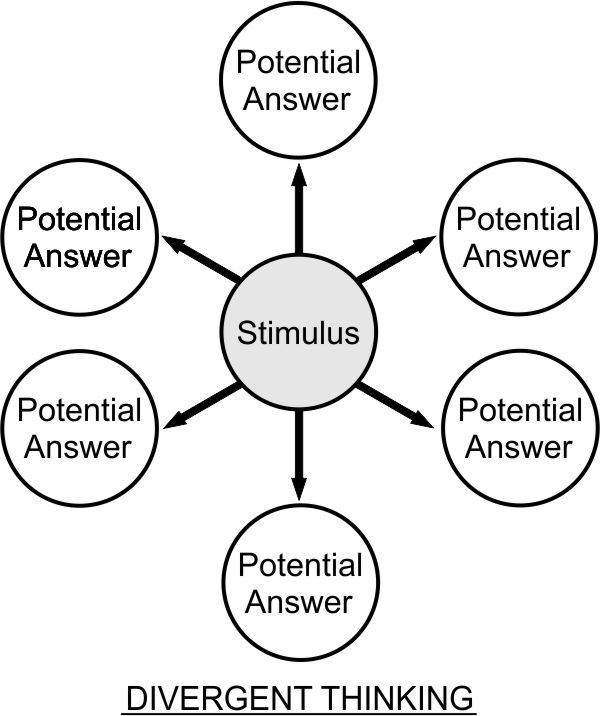
Before I challenge my students to design a project on his/her own, I provided them with an experience in divergent thinking. I used the lesson from John Spencer that he provides for FREE as download from his PBL Toolbox. Here is his maker challenge:
I gathered supplies at the ready for my students including scissors and masking tape to aid in the construction.
Once my 20 students arrived, I introduced them to the challenge and gave them 5 minutes to brainstorm what they each would make with the given materials. They proceeded to share their ideas round-robin style with classmates at their table (4 students total).
Students sharing their ideas in their groups of 4 at their table.
Next, I formed teams of 2 students (random name drawings chosen from a coffee can). Once in their team they shared ideas and crossed out ones that didn't make sense, combined similar ideas, and even tried to "mash-up" seemingly unrelated ideas. I then asked them to choose 1 idea to construct a prototype of in the next 40 minutes.
Students in teams of 2 sharing their ideas and deleting, combining, & mashing-up!
As I walked around the room, I asked students what they were making and was sure to ask them what problem their idea would solve and who the prospective user would be. With this being my first time doing a maker challenge, I was impressed at their enthusiasm and the uniqueness of each group's ideas.
Students constructing a roller coaster ramp. FYI it never fully worked during their tests, but it did work when they presented to their classmates! #superexciting
Team modeling their latest snorkel-goggle prototype!
After the 40 minutes of construction, students proceeded to share their prototypes with their classmates. Here is what the 10 teams produced: bird feeder, play mobile for crib, floating Ferris wheel toy for the bath, roller coaster ramp, mini-guitar picture frame, slingshot, snorkel-goggles, portable flute, bluetooth controlled portable fan, and fishing pole with floating tackle box. Yes, all those different ideas from using the same materials!
Student Reflection
The last part of the challenge was for each student to reflect on their experience. I asked them to respond to 3 questions on our LMS:
What was your product? What problem does it solve and who is the ideal consumer?
Describe 2 problems or failures that happened along the way to creating the final product. How were they overcome and/or what was the importance of them?
What is 1 takeaway from your experience in the Maker Challenge?
Here are some of their responses:
Problems/Failures:
"It was much more harder to make than I thought it would be, and I realized that when looking at the materials. We also had to play around with the design and what we wanted it to look like. It took a couple of eliminations and additions of materials to be satisfied with the final product."
Takeaways:
"It was a good was to practice being creative and to really think outside the box. I also found brainstorming independently and then combining ideas with other people to be extremely helpful and productive." "One thing that I learned from this activity was that when designing a product or simply completing a task, it's not always going to go as planned so in order to be successful you are going to need to be innovative in the sense that you need to be creative with how you find a solution to any obstacles you may stumble upon." "I've realized how difficult it is to design and create new products and prototypes without ample time and research. It makes me wonder how people keep inventing new and original technologies."
From Divergent Thinking to Design Thinking for PBL
I began by providing my students with a challenge (set of materials), they brainstormed many ideas for what they could make out of them. Thus, there was no wrong answer and the only constraint was the materials list.
After the students created a list of possibilities, they used convergent thinking with a partner to narrow their lists down to 1 idea to construct. As my students move on through PBL, I will promote a more design thinking approach to their project. The concepts of the project will be determined by the MA Department of Education Standards/NGSS for Waves.
Please check back for my next blog on PBL in Physics (Part 2 - the Standards)
Empower is honestly a book I should read every month to remind and reaffirm to me that what I do in my classroom is right for students. AJ and John introduce the book as for "the wild ones" and "the innovators and teachers who are rewriting the rules." THIS BOOK IS FOR ME! There is so much I take away from this book, so without further ado, away we go . . .
For 19 years I was that teacher. The teacher whose students were being talked at and taking notes. I would do so much work to find demonstrations to make the concepts come alive. I spent countless hours writing and rewriting prescribed labs only to get back the same thing from every student. The only thing I knew was "the old formula" for my students - to be compliant. 5 years ago I shifted to the flipped classroom and have seen increased engagement and empowerment in my students each year.
AJ & John define the empowered classroom as one that is (and I paraphrase here) committed to student interests, to prepare them for anything, to ask them "What do you want to learn?", to have students create their own path, having students assess their own learning, and to promote creativity.
In Chapter 3 they promote the shift from "making the subject interesting" to tapping into student interests. As a physics teacher, I always prided myself on finding real-world examples to make the concepts relatable to my students. I performed cool demonstrations (the disappearing eye dropper!), found interesting videos (Bill Nye anyone?), and created exciting activities (pushing my car to study Newton's 2nd Law!) to "wow" my students. There was one thing I didn't realize then - these things were all cool and exciting to me, but were they cool and exciting to my students? I was doing so much more work than my students were. In a traditional classroom, it is easy to sit there and "do school" - take notes, fill out the worksheet, complete the lab report, take the test, REPEAT. However, empowering students takes more work on their part than a traditional classroom as students now take ownership of their learning. Empower pushes me to ask my students what their interests are and how they can relate the concepts to these interests.
Student choice is the basis for Chapter 4 and has challenged me to rewrite my unit on Waves and Light next term. I give students choice in my classroom from Genius Hour to their products that showcase their learning. However, I have not gone full PBL and empowered my students. I am currently planning for students to choose how they access the content for Waves and Light (characteristics, behaviors, the EM Spectrum, image formation by mirrors and lenses), then asking them to demonstrate their knowledge by making a video (or digital book or podcast) their classmates can also access to learn the concepts. By doing this I hope to achieve AJ & John's goal of - "Changing the game of school means actually allowing students to create their own game. This is empowerment." This empowerment really starts with a single question as posed in Chapter 5, "What decisions am I making for my students that they could make for themselves?" As each year of flipped learning has gone by, I have given up more and more control to the students. "It's a shift from a compliant mindset to a self-directed mindset" as AJ & John stated in Chapter 6. This shift is not only for teachers but for students as well.
In Fall 2016, I introduced an Innovations Class to my high school. I had been inspired by Don Wettrick and his students at Noblesville HS and wanted to offer this opportunity to my community of learners. This type of class is one that demands students to be self-starters and self-managers (Chapter 6). Students begin by choosing topics, writing pre-mortems, and proceed to chart their course. They further set 2-week plans, choose strategies to achieve their goals, and provide evidence of answers to their questions. During this process, there is much 1:1 peer assessing (via Walk and Talks) and self-assessing of their progress. Some are conducting interviews, creating and analyzing surveys, reading articles, watching videos, and cold emailing professionals in the field. Yes, and all this is going in one classroom! It may appear chaotic from the outside, but I appreciate how each student is choosing to create his/her "authentic research experience." (Chapter 7)
Now how does a teacher go about assessing these new experiences? In Chapter 8 AJ & John challenge teachers to make assessment more like life and less like school. "The shift from taking an assessment to assessing their own learning." My classroom has become full of micro-conversations with individual students, thus giving consistent feedback throughout the learning process. But how I can I empower students to own the assessment process? They suggest students be able to figure out:
what they already know
what they don't know
what they want to master
what they will do to improve
"Through self-assessment students attribute success to themselves, not the teacher and feel empowered." I look to use more of what they recommend to challenge my students to:
chart progress
track goals
self-reflect
survey their learning
self-assess with rubrics
use checklists
These are many ideas to consider when designing assessments to include students in the process.
In Chapter 10 AJ & John talk about ice cream. Ice cream? They lay out the argument of differentiation in a tiered system compared to an adjustable system. Their example is as follows: at Baskin Robbins you can choose your flavor and choose 1 scoop, 2 scoops, etc. However, at your local frozen yogurt place, you can choose exactly the amount of fro-yo and the type and amount of toppings as well. From the tiered system of BR31 where the teacher provides the options to the adjustable system of fro-yo where students "own the entire process." Now before you open up your fro-yo classroom, think about this - what about a Coldstone Creamery classroom? That is one where "students move from choice to freedom in the content." They take it one step further and ask, "What if students felt the permission to modify things on their own? #mindblown For a student to modify on their own s/he would have to be in tune with their learning style. I have sat in many IEP meetings where parents and teachers discuss the accommodations in the plan. But instead of parents and teachers being responsible for these, what if the student took real ownership of their learning and designed their own strategies to best assess their learning? There is much to consider here and would be a shift in thinking how to execute an education plan. With classes of students with a multitude of learning styles, this appears messy and chaotic, but as AJ & John state, "but it doesn't matter, its frozen yogurt, every work is supposed to be different."
When I reflect on my first 19 years of teaching, I thoroughly enjoyed being up there in front of the students. Every lecture was a performance. I loved making bad physics jokes and being the one person in the room who had all the attention. How could I flip my class and put my students in charge of their learning and be relegated to "guide on the side"? What would happen to me? AJ & John respond, "So does being a "guide on the side" mean you lose your influence? No. Guides are actually pretty influential (take Gandolf, Yoda, Ms. Frizzle)." In my flipped classroom I feel even more important now that I have the time to talk to every student every day and be their guide.
Thank you AJ and John for reaffirming for my shift in teaching 5 years ago, the inspiration to keep going, and the new challenges you pose in Empower.
Last year one of my Edu-Heroines, Joy Kirr, shared her story of shifting from a traditional classroom to a student-centered learning environment. Shift This provides teachers a window into her classroom and how she has changed the learning space, classwork, homework, & grading and further challenged her students to become self-directed. Here are my takeaways from her book:
In Chapter 4 Joy shares with us the power of music in the classroom. As I have been practicing flipped learning the past 5 years, I always look for ways to get music into my video lessons. "Freefalling" by Tom Petty is pretty obvious for a video on gravity and thanks to Justin Timberlake for the song "Mirrors" as the intro to my video on image formation by mirrors. I have been playing music during class for years now. I even installed 4 speakers in each corner of the room to create some surround sound. I take requests from students and even have my room playlist up on Spotify. As much as Joy promotes music in the classroom, she truly does practice what she preaches as she played and even sang along to "Let It Go" last summer during her presentation at BLC17!
When I was a traditional classroom teacher, I did my best to answer every one of my students' questions. However, in my flipped learning environment, I often put their questions back on them. Joy states, "If students ask you a question, ask it back to the class to see what they think. Try your best to not answer their questions, let them figure out their own answers instead (Chapter 5 Classwork)." This has been a big transition for me as I now usually answer a student's question with a question. The most common instance of this is when my students ask me to check their answer to a physics problem. Pre-flipped learning I simply answered it, but these days I encourage them to check with their group (they sit in groups of 4 students) or I ask them to describe to me how they solved the problem. By doing this I aim to promote more collaborative problem-solving and learning the process over just getting the right answer.
What is the true purpose of grading? Feedback. My students work in small groups (usually 2) on projects to showcase their learning by creating digital books, screencasts, and slide presentations. When one of the students asks me to check the work, I typically respond with, "Can you have your partner proof over it first?" In Chapter 7 Grading Joy observes, "The more feedback students can give one another before you see their polished work, the better the work will be by the time it gets to you."
This is definitely true as I witness the conversation that ensues and seeing them make improvements to their work before asking me again for feedback. This gives me more confidence that both students are working collaboratively and that the product best represents their effort.
I first heard of Joy Kirr when I began searching for more information on Genius Hour. She is the curator of the spectacular Livebinders page on Genius Hour. I have incorporated this passion time or 20% time into my flipped classroom the last 5 years. Genius Hour provides students with the class time to research a topic they are interested in. As a process of this style of self-directed learning, I am always asking students to blog on the questions, "What did I learn?" "What are the next steps?" as Joy encourages. In Chapter 9 Student-Direct Learning she states, "The biggest result of including Genius Hour in my pedagogy is that I am now comfortable enough to offer more student voice and choice in all we do." Absolutely Joy! I find myself allowing students to make more choices on how they present their learning. In fact, a student last week asked me what example she should use in a presentation as evidence of learning a concept. She even gave me a few choices for me to select from, but I simply responded, "Whichever example you think best illustrates the concept." Her mind was blown!
In conclusion, I would say the biggest takeaway from reading her book has been inspiring me to finally take my desk out of my classroom. I did it! Now that I am over halfway through the school year, I can honestly say it is the best thing I have ever done. Joy asks in her book, "How do you build trust with students?" Without being chained to a desk, it forces me to walk around more and talk to students. It is these one-on-one conversations about their interests and connecting with them that improves the overall learning. It is not sitting at my desk going through emails or blogging (haha!).
A BIG thank you to Joy for sharing her story! As I have also shifted my classroom, it is comforting knowing there are more teachers out there like Joy taking these risks and reaping the benefits and rewards for their students.